Key takeaways
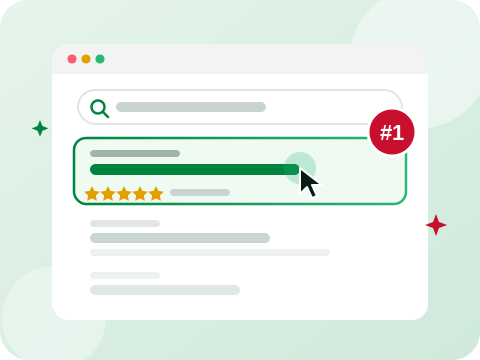
- The top three Google results get most of the clicks. Page two gets almost none.
- Searchers are already looking for what you sell, which makes them the most valuable visitors you can get.
- You can estimate what poor rankings cost you in pounds with a simple sum.
Think of Google as the high street most of your customers walk down before they buy. If your shop is on that street, people see it. If it’s round the back on an unmarked lane, they don’t, however good it is.
Most people only look at the first few results
When someone searches for “plumber in Aberystwyth” or “wedding venue north Wales”, they usually click one of the first few results and stop there. Industry studies of click-through rates consistently show the same pattern:
- The #1 result gets roughly a quarter or more of all clicks
- The top three together take the majority
- Results at the bottom of page one get just a few percent
- Page two gets well under 1%
So moving from position 8 to position 2 doesn’t give you a little more business. It can give you several times more.
Search traffic is the best kind of traffic
A social media ad interrupts someone scrolling past. A Google search is someone actively looking for what you sell, right now. That’s why search visitors convert into enquiries and sales so much better than most other marketing.
And unlike ads, you don’t pay for each click. Once you rank, the visits keep coming.
The cost of not ranking
Here’s the simple sum we use with every client:
Searches per month × extra clicks you’d get in the top 3 × % who enquire × % who buy × average customer value
Say 1,500 people a month search for your service in your area, and you’re on page two. Even with modest conversion rates, being in the top three could mean thousands of pounds a month going to your competitors instead of you. Try your own numbers in our lost revenue calculator.
It’s not just Google any more
More people now ask ChatGPT, Google’s AI Overviews or Perplexity for recommendations. These tools tend to name just a handful of businesses, and they lean heavily on the same signals Google uses. Read why AI search visibility matters to find out more.
What to do next
- Search for your main service and town, and see where you appear
- Check your Google Business Profile is complete
- Work out your number with the calculator
- Get a free SEO audit to see exactly what’s holding you back